
Cardboard Tube Bird Feeders
Cold weather is the perfect time to help our feathered friends. These Cardboard Tube Bird Feeders are easy crafts for kids that turn simple household items into a treat birds will love. They are inexpensive, fun to make, and a wonderful way to teach children about caring for wildlife during the winter months.
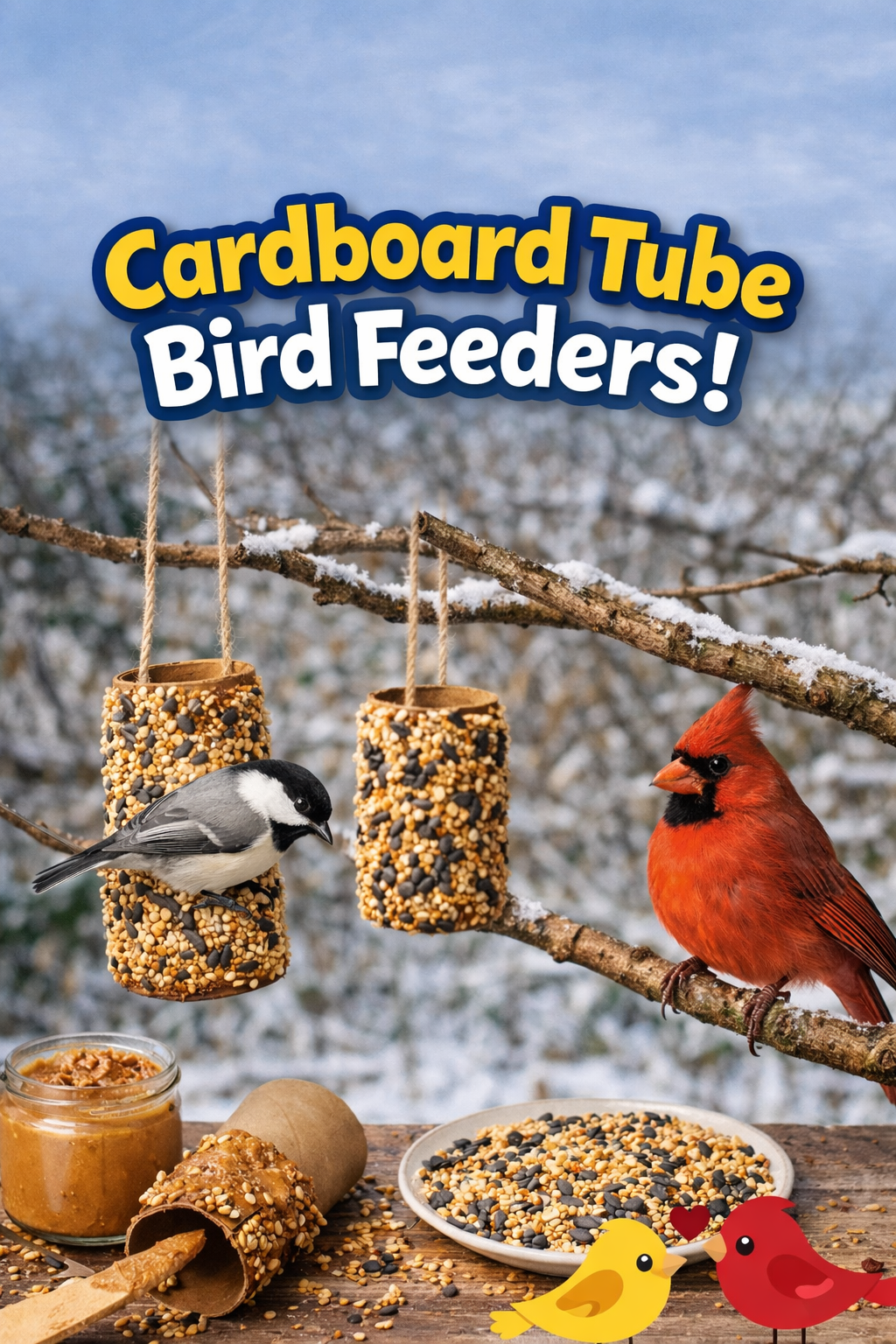
Supplies
- Cardboard tubes from paper towels or toilet paper
- Suet, almond butter, sunflower seed butter, or other bird safe spread
- Birdseed
- Butter knife or spoon for spreading
- String or yarn if you would like to hang them
Instructions
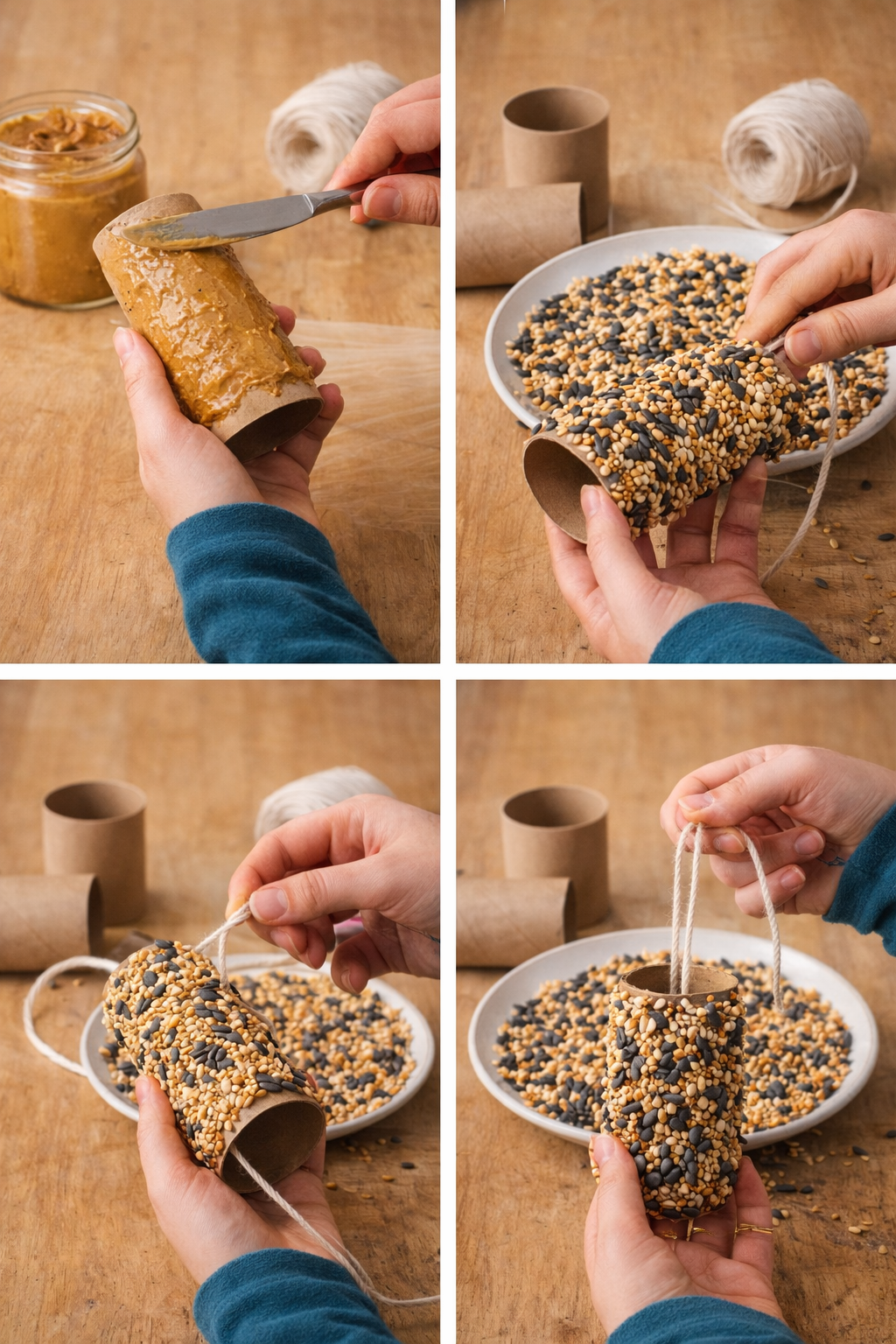
Spread a thick layer of suet or nut butter all around the outside of the cardboard tube. Make sure it is completely covered so the seeds will stick well.
Pour birdseed onto a plate or shallow pan. Roll the covered tube in the birdseed until it is fully coated.
If your tube does not slide easily onto a branch, thread a piece of string through the tube and tie a knot to create a hanger.
Slip the feeder onto a shrub or tree branch, or hang it from a sturdy limb. Then step back and watch the birds enjoy their special treat.
Fun Facts
It is believed that a monk who lived in the sixth century was one of the earliest known people to feed birds. Over time, feeding birds became a popular hobby around the world. Today, many families enjoy watching colorful birds visit their yards during the colder months. Source: Cole’s – Four Fun Facts About The History Of Bird Feeding
Different birds prefer different foods. Chickadees and woodpeckers love suet, while finches often enjoy sunflower seeds.
Tips for Success
Always use bird safe spreads such as sunflower seed butter if there are peanut allergies in your group.
Avoid using honey, as it can be harmful to birds.
Supervise younger children when spreading and rolling the tubes to keep things neat and safe.
Helping birds through the winter is a wonderful way to combine creativity with kindness. These cardboard tube bird feeders are simple classroom activities and easy crafts for kids that make a big difference.
Teacher Friendly Educational Extension
This simple craft can become a wonderful classroom activity.
Have students observe and record which birds visit the feeder. They can keep a bird journal and draw pictures of the birds they see. This connects beautifully to science lessons about habitats, migration, and food chains.
You can also turn it into a math activity by counting how many birds visit in a set amount of time. Compare morning and afternoon visits.
For a writing extension, ask students to write a short paragraph about why it is important to help animals during winter. This encourages empathy and environmental awareness.
Very cool, but I bet they will bring a LOT of squirrels too… 😉