DIY Rubber Cement Easter Eggs
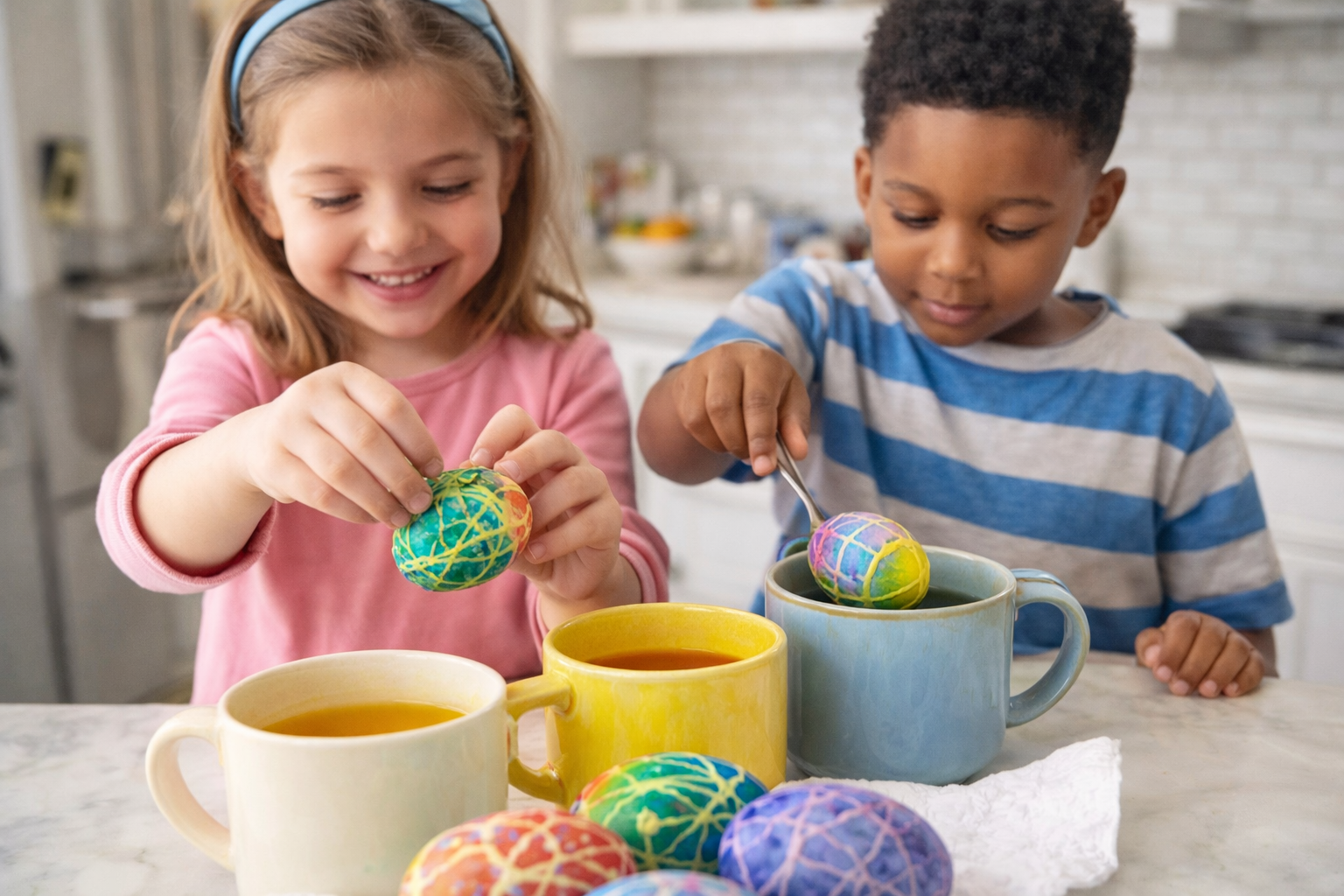
DIY Rubber Cement Easter Eggs is a fun way to give traditional dyed eggs a cool marbled and layered look. Kids love the surprise of peeling away the rubber cement to reveal the hidden colors underneath. This easy Easter craft is a great activity for families, classrooms, and holiday parties.
Supplies
- Hard-boiled eggs
- Food coloring
- White vinegar
- Water
- Spoon
- Ceramic mug or small bowl
- Rubber cement
- Paper towels or drying rack
Instructions
- Make sure the hard-boiled eggs are cool and dry before you begin.
- Drizzle rubber cement over one side of each egg. Let it dry completely, then turn the egg over and drizzle the other side. Let that dry too.
- In a ceramic mug or bowl, mix 1/2 cup water with 3 tablespoons white vinegar. Add several drops of food coloring and stir.
- Use a spoon to carefully lower an egg into the dye mixture. Leave it in until you reach the color you want, then remove it and let it dry.
- Once the egg is dry, drizzle more rubber cement over parts of the egg. Let it dry, turn the egg over, and repeat on the other side.
- Prepare a second dye color in a clean bowl or mug. Lower the egg into the new color and leave it in until you like the result. Remove and let dry completely.
- Gently rub and roll the dried rubber cement off the egg to reveal the colorful design underneath.
Tips
✅Cover your work surface before you start since food coloring can stain.
✅Let each layer dry fully before moving on for the best results.
✅Try different color combinations to make each egg unique.
✅Adults should supervise younger children when using rubber cement and handling dyed eggs.
Fun Facts
Some theorists have traced Easter egg hunts back to the Pennsylvania Dutch of the 1700s who believed that a hare called ‘Oschter Haws’ laid eggs in the grass. Therefore, kids would build nests (which many symbolize today with the fake green “grass” that is placed at the bottom of the Easter basket) and search for the eggs. Source: St. Leo University – Easter Eggs: An Interesting History Behind Why We Celebrate, Decorate, & Hide Them
Patterns, Templates and Printables
Pair this project with more Easter crafts, coloring pages for kids, and printable templates to create a full holiday activity day. This is a great hands-on addition to Easter classroom activities and family fun at home.
Teacher Friendly Educational Extension
This Easter egg activity is a fun way to introduce simple art and science concepts. Children can predict what will happen when one color is placed over another, then compare the final results after the rubber cement is removed. Teachers can also use the activity to talk about patterns, color mixing, sequencing, and holiday traditions. Have students describe their finished eggs with creative writing words like bright, swirled, dotted, or marbled.
Supplies
Hard Boiled Eggs
Food Coloring
White Vinegar
Spoon
Rubber Cement