Floam Octopus Sculpture & Recipe
This fun and squishy Floam Octopus craft is a creative way for kids to explore both art and simple science. Using homemade floam, kids can sculpt their own ocean creatures while learning how slime works. Make it thick for sculpting or softer for sensory play.
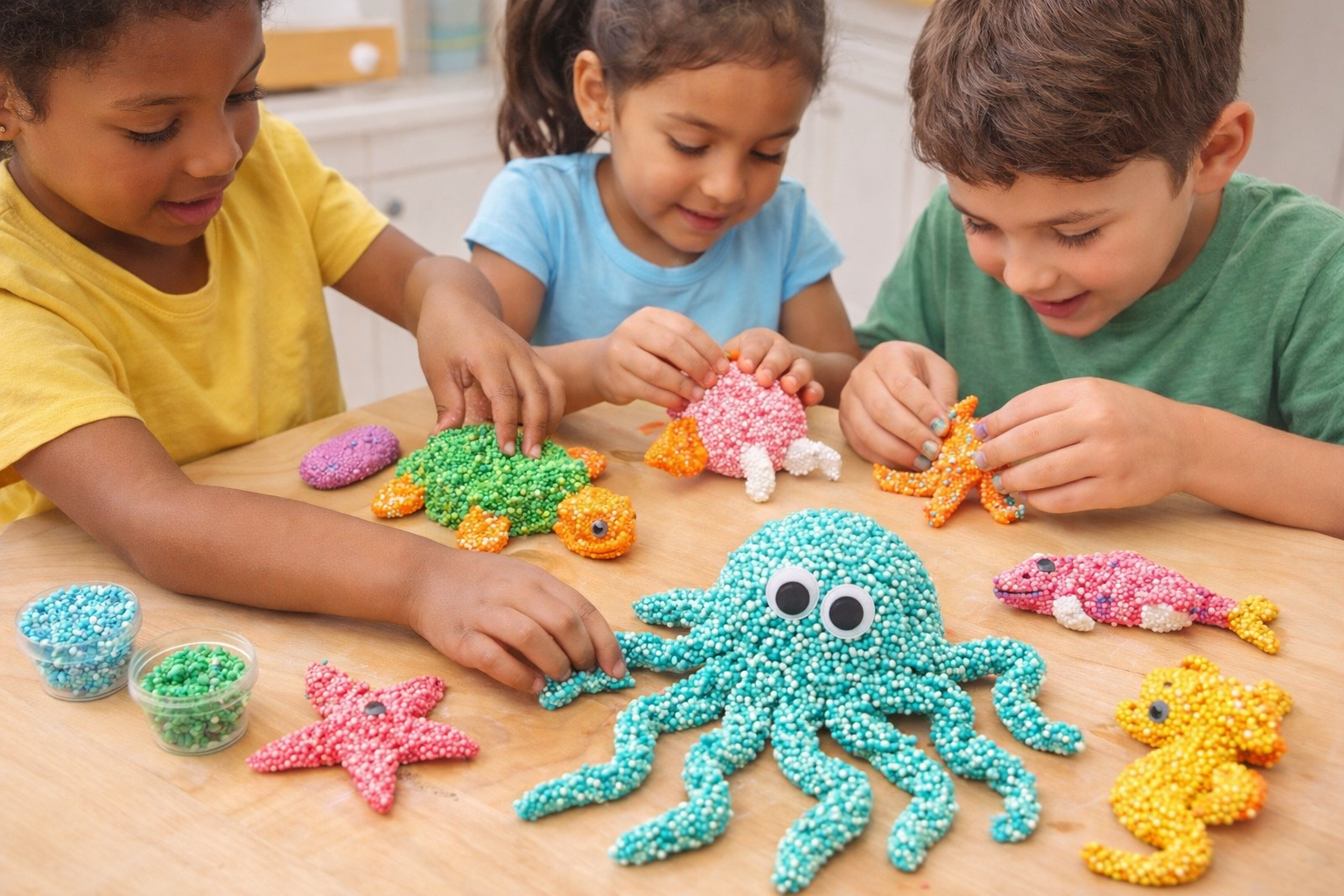
This activity is best for older kids since it is not taste-safe. With a little imagination, kids can create a whole underwater world full of colorful sea animals.
Supplies
• Elmer’s Liquid School Glue
• Mini Foam Beads
• Liquid Starch
• Food Coloring
• Wax Paper
• 5/8″ Wiggle Eyes
Instructions
- Make a batch of floam slime using the recipe below. For sculpting, a thicker consistency works best.
- Roll a 2-inch ball of slime and place it on wax paper. Press it down to about 1/2 inch thick to form the octopus head.
- Press two wiggle eyes into the front of the head.
- Roll out eight tubes of slime about 1/2 inch thick and 6 inches long.
- Attach one end of each tube to the head to form the tentacles. Gently bend them into fun squiggly shapes.
- Let the octopus dry on wax paper for about 2 days. Once dry, carefully peel it off.
- If you want to keep the floam soft for play, store it in an airtight container. Leaving it out will allow it to harden into a sculpture.
Floam Recipe
- Pour about 1/2 cup of Elmer’s glue into a bowl.
- Add a few drops of food coloring and mix well.
- Slowly add liquid starch, stirring as you go, until the mixture thickens into slime.
- Fold in mini foam beads until you reach your desired texture.
Fun Facts About Slime
• Slime is made from a chemical reaction between glue and liquid starch.
• The glue contains polyvinyl alcohol, while liquid starch provides borate ions.
• These ingredients link together to form long, stretchy chains, giving slime its unique texture.
Patterns, Templates and Printables
This project is all about creativity, so no template is required. Encourage kids to design their own ocean creatures using floam.

Teacher Friendly Educational Extension
Turn this craft into a fun science and learning activity.
• Science: Talk about polymers and how slime changes from liquid to solid-like material.
• Ocean Learning: Have kids research octopuses and their habitats.
• Creative Writing: Ask kids to write a short story about their octopus adventure.
• Art Display: Create a classroom “under the sea” display using all the finished sculptures.