Make Your Own Non Toxic Finger Paint Project
Kids love messy, colorful fun, and this homemade finger paint recipe is a great way to let them create while keeping things simple. This non toxic finger paint is easy to make with basic pantry ingredients and works well for Mother’s Day gifts, classroom activities, or everyday art time at home.
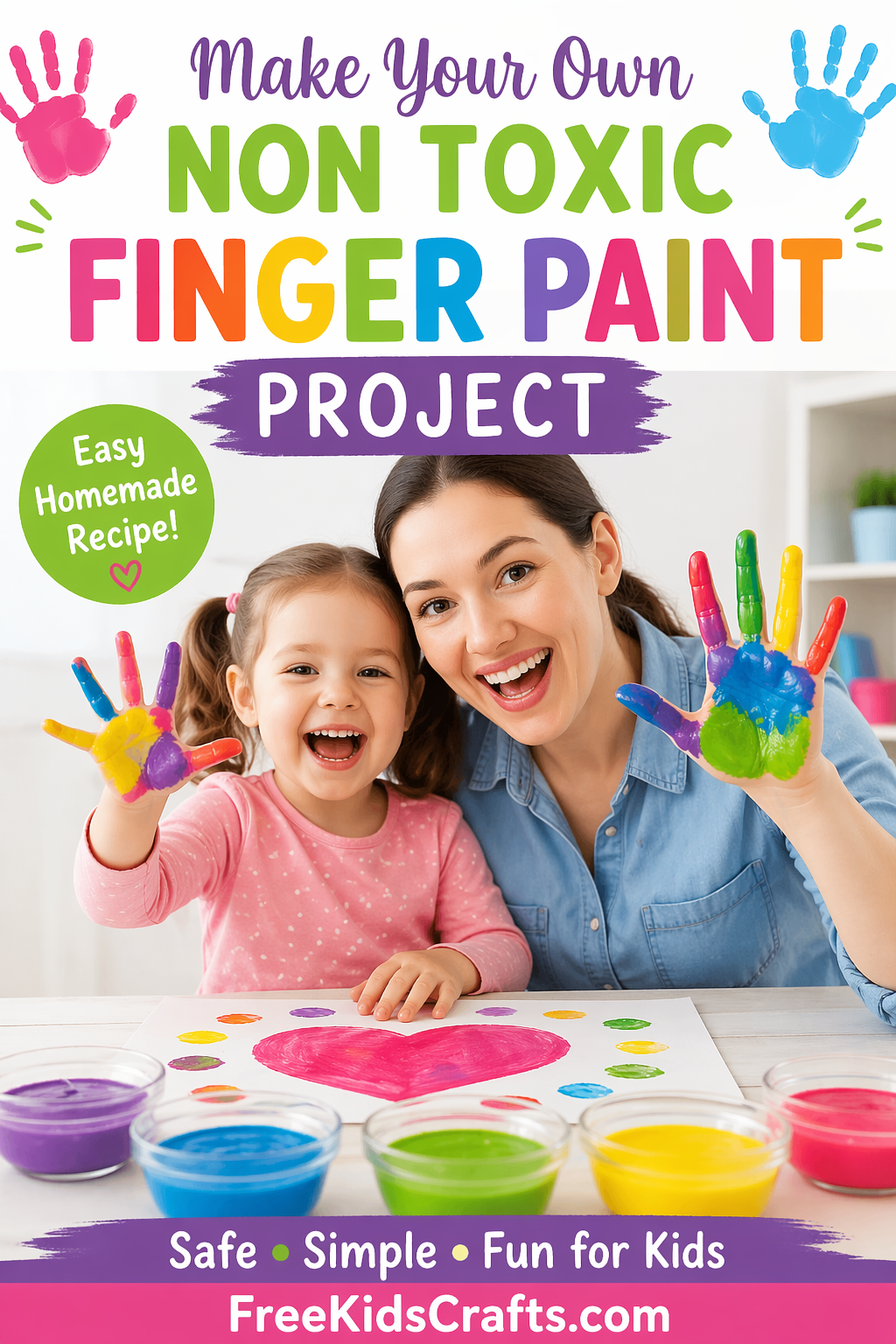
Homemade paint is a fun way to encourage creativity, sensory play, and hands-on learning. Once the paint cools, kids can use it to make handprint art, finger painting projects, or colorful pictures on blank paper.
Supplies
- 3 tablespoons organic sugar
- 1/2 teaspoon salt
- 1/2 cup organic cornstarch
- 2 cups water
- Organic food colorants
- Muffin tin or small containers
- Small saucepan
- Spoon or whisk
- Paper for painting
Instructions
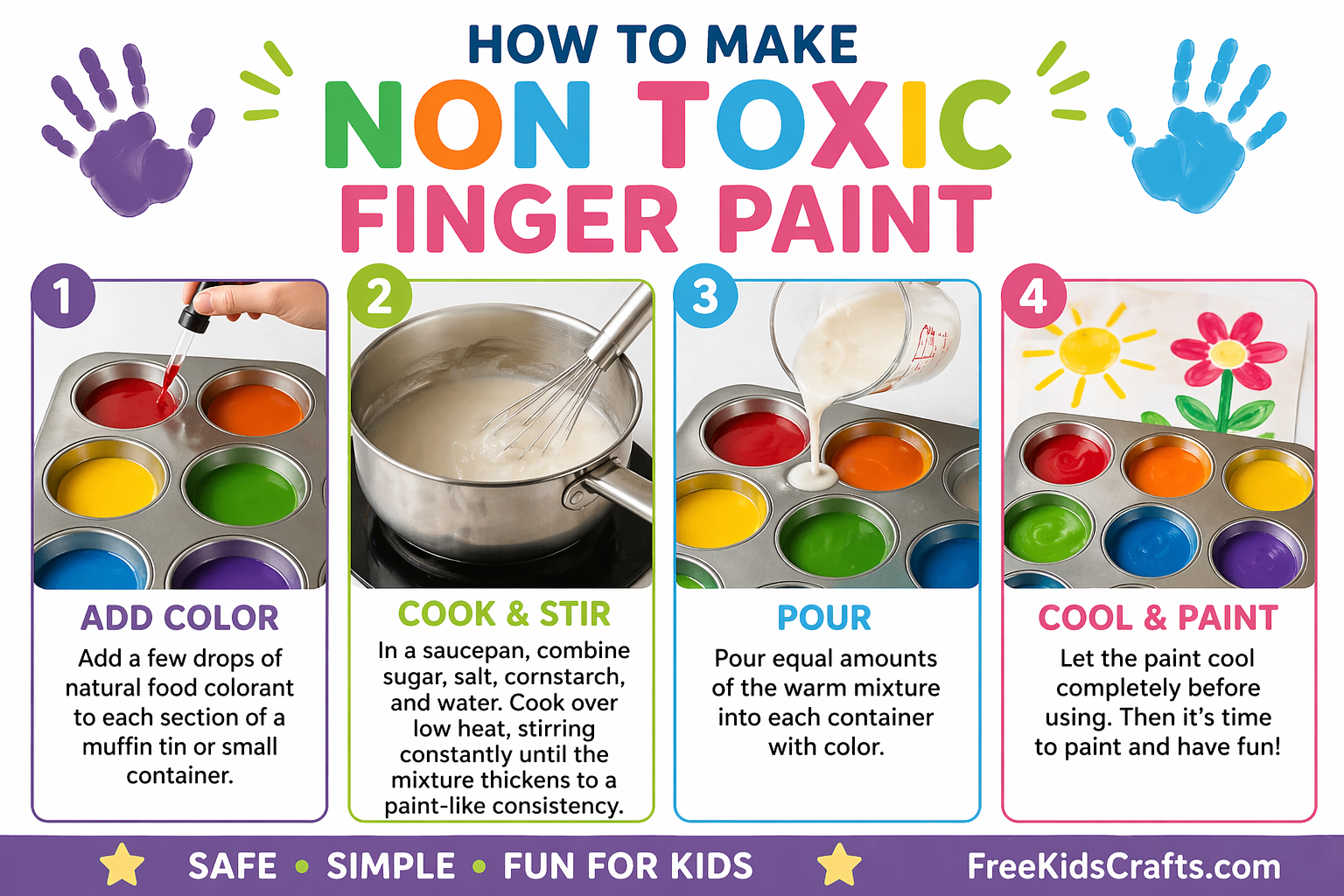
- Add a couple of drops of natural food colorant into each section of a muffin tin or into separate small containers.
- In a small saucepan, combine the sugar, salt, cornstarch, and water.
- Cook over low heat, stirring constantly, until the mixture thickens to a smooth paint-like consistency.
- Pour equal amounts of the warm paint mixture into each prepared container.
- Stir each color until the paint is evenly mixed.
- Let the finger paint cool completely before using.
- Use the paint on blank paper or with one of your favorite printable templates and enjoy creating colorful masterpieces.
Patterns, Templates and Printables
Use this homemade finger paint with blank paper, handprint keepsakes, or printable templates for extra fun. It is a wonderful choice for coloring pages for kids, seasonal art projects, and classroom activities.
Teacher Friendly Educational Extension
This is a great activity for sensory exploration and early learning. Children can practice naming colors, mixing shades, and making patterns with their fingers and hands. Teachers and parents can also use this activity to introduce simple science concepts by talking about how heating and mixing ingredients changes the texture. For younger children, encourage shape making, letter tracing, or counting finger marks on the page.
Supplies
3 tablespoons organic sugar
1/2 teaspoon salt
1/2 cup organic corn starch
2 cups water
organic food colorants
Instructions
Add a couple of drops of natural food colorants to a muffin tin or other container.
Add all of the other ingredients to a small saucepan and continually stir over low heat until the mixture thickens to a paint consistency.
Pour equal amounts of the paint mixture into each container and mix.
Once it cools, select one of the projects below or just a blank piece of paper and watch the delight on the kids' faces as their hands turn out their masterpieces.
Contributor

These projects are created by Terri, Betty, Jamie or one of the talented staff members at MakingFriends.com. They have been created exclusively for publication on FreeKidsCrafts.com with supplies you'll be able to find around your house.